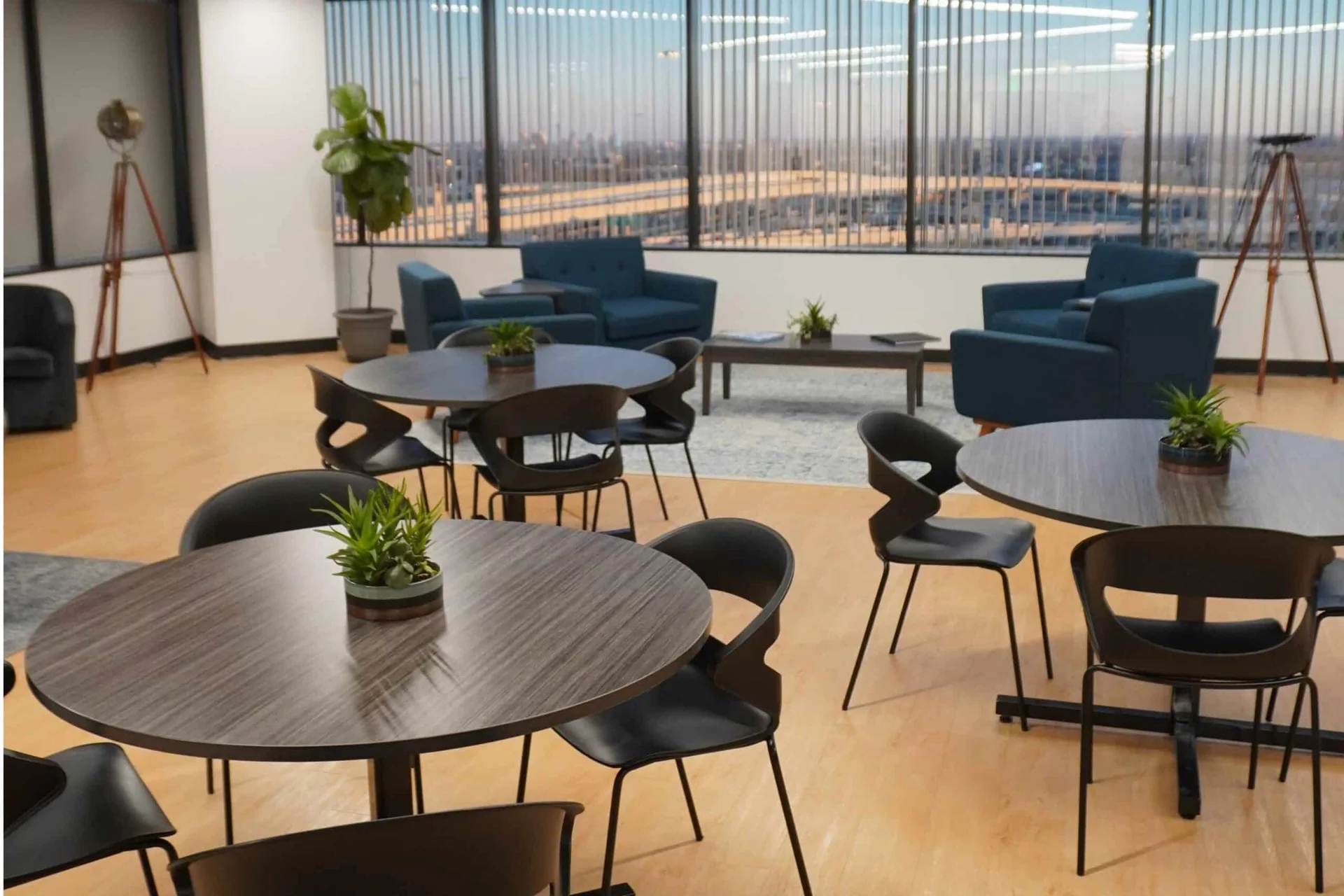
Remote work removed the commute and, for a lot of people, the colleagues along with it. Coworking spaces address that directly: they restore the casual, unplanned human contact that remote work eliminated, while keeping the flexibility that made remote work worth having.
This matters commercially, not just personally. Isolation degrades focus, motivation, and the willingness to keep going on hard problems.
The workplace loneliness problem
Work has changed enormously in two decades, driven by technology and flatter organizations. One unintended consequence is isolation: many workers report being more digitally connected and less personally connected than ever.
Research from employee-experience company Perceptyx found that people describing themselves as "very lonely" tended to carry heavier meeting loads than less-lonely colleagues — more than 40% of those surveyed spent over half their working hours in meetings. More contact hours, less actual connection.
The effect is sharpest for remote and hybrid workers, who lose the spontaneous interactions that build belonging: the passing question, the shared coffee, the two-minute conversation that solves a problem before it grows.
What coworking changes
Community and belonging
A shared workspace supplies a professional community without requiring you to join a company to get one. Members come from different industries, which broadens both your network and the range of perspectives you encounter day to day.
Most spaces reinforce this with events, workshops, and informal gatherings where members meet properly rather than in passing. The physical layout usually helps too — communal kitchens, lounges, and open areas positioned to make casual conversation likely, which is the opposite of what a floor of cubicles does.
Flexibility and convenience
Membership options cover private offices, dedicated desks, open workspace, and virtual offices, so you can pick what actually fits your work and change it later.
For startups and small businesses, that ability to scale in either direction matters: add desks as you hire, without the long commitment of a lease.
Convenience compounds it. Fast internet, meeting rooms, printing, coffee, and parking are handled, which removes a surprising amount of small administrative work from the week. Many spaces, including SA Cowork, offer 24/7 member access, so early risers and night owls both get a workspace that fits.
Better focus
Working from home blurs the line between work and everything else, and that blur is where focus goes. A dedicated workspace restores a boundary that most people find they need.
Design does real work here: ergonomic furniture, natural light, quiet zones and private phone booths for concentration, open areas for collaboration. Being surrounded by people who are visibly working also creates a light, useful accountability — usually more effective than being formally supervised.
Work-life balance
A good workspace is professional and welcoming at once, and that combination supports a healthier balance rather than just longer hours in a nicer room.
The flexibility is what makes it work. Members choose where and when they work around family commitments, health, and personal priorities. Many spaces add wellness provisions — quiet rooms, fitness access, comfortable places to step away — that encourage genuine breaks and help prevent burnout.
Networking that actually produces work
The mix of entrepreneurs, freelancers, and small teams in one building makes cross-industry collaboration likely rather than theoretical. Clients, partners, and mentors are frequently already in the room.
Events help — networking breakfasts, panels, member showcases — but so does simple proximity over time. A tech founder finds a marketing specialist two tables away; a consultant meets an accountant at the coffee machine. Relationships built over months convert far better than business cards exchanged at a mixer.
Spaces that belong to a larger network add reach: members can often work from other locations while travelling, which is genuinely useful for anyone expanding into new markets.
Lower, more predictable cost
For startups and small businesses, coworking is materially cheaper than leasing. A conventional lease brings a long commitment, significant upfront cost, and separate bills for utilities, maintenance, furniture, and supplies.
Membership replaces all of that with one fee for what you actually use. Fixed costs drop, and the difference can go into product, marketing, or hiring — which is where it does more good, especially early on.
Predictability matters as much as the amount. A known monthly figure makes budgeting straightforward and removes the unexpected building costs that catch small businesses out.
The bottom line
Coworking spaces address the specific failures of both the traditional office and full-time remote work. Community reduces isolation and produces collaboration. Flexible terms fit businesses that change. A well-designed environment supports focus. Sensible amenities support balance. And the cost structure frees up money for the business itself.
For startups, small business owners, and larger companies alike, that combination is why flexible workspace stopped being an experiment and became a standard option.
Questions about coworking in San Antonio?
SA Cowork is at 7550 I-10, Suite 1400, San Antonio, TX 78229 — off I-10 and 410, with free covered parking and 24/7 member access.
Book a tour or call (210) 985-9749.