WeWork's collapse was a failure of one company's business model — aggressive expansion, expensive downtown sites, and oversized spaces leased long and sold short — not a verdict on coworking itself. The industry it grew out of is still expanding, and the operators that survived did so by getting the basics right.
If WeWork made you wary of flexible workspace, the useful question is not whether coworking works. It is how to tell a well-run space from a badly run one.
What actually went wrong at WeWork
WeWork expanded rapidly into expensive downtown locations, took on far more square footage than it could fill, and marketed an atmosphere — ping pong, kegs, a permanent party — that had little to do with getting work done. The costs of that model were structural: long, expensive leases sold as short, cheap memberships. When demand for those downtown locations fell, the gap between the two became fatal.
The result was financial instability, and members left exposed by it.
That is a specific failure of site selection, scale, and financing. It is not an indictment of shared workspace. The North American coworking market is still projected to grow at a compound annual rate above 11%, according to Mordor Intelligence.
What a well-run coworking space does differently
Sensible locations
One size does not fit all. Good operators put space where members actually want to be — which, for a great many professionals, means an accessible suburban or business-corridor location with parking rather than an expensive downtown tower with a difficult commute.
Work-focused amenities
The clearest signal of a serious space is what it prioritizes. Fast, reliable internet, ergonomic furniture, properly equipped meeting rooms, and genuinely quiet areas to concentrate matter more than recreation. Amenities should remove friction from work, not compete with it.
Wellness that supports the working day
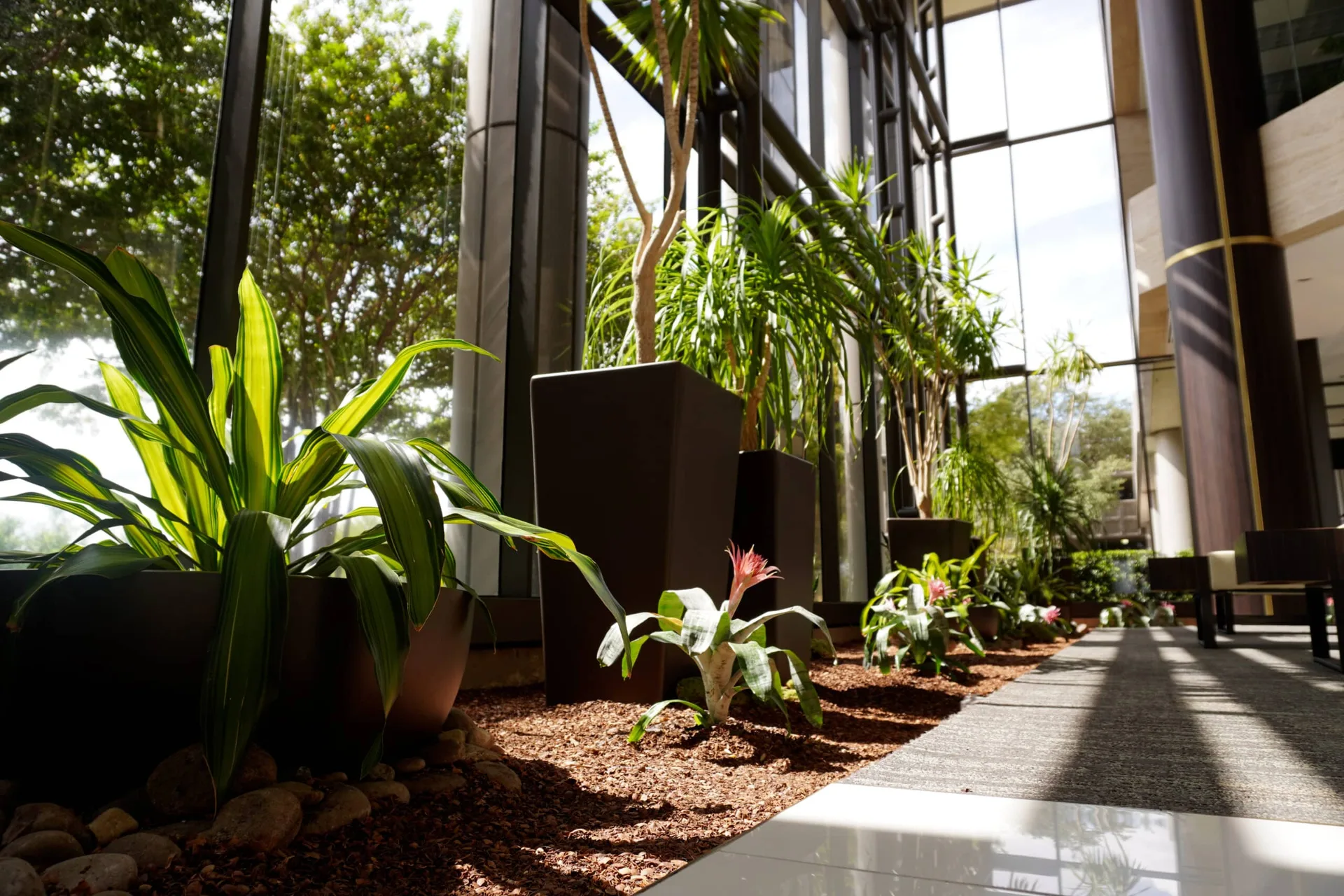
Wellbeing is not a gimmick when it is done properly: natural light, quiet rooms, comfortable places to step away from a screen, and space to decompress between meetings. These reduce burnout, and reduced burnout shows up directly in output.
Good coffee, and what it's really for
Complimentary coffee sounds trivial. In practice the coffee machine is where members from different companies actually meet — the unplanned conversation that produces a referral or an introduction. It is the cheapest networking infrastructure a space can have.
Real networking
Effective spaces host regular community events that give members a reason to meet without it feeling forced. The value comes from the community tie-in — recurring events with the same people — rather than one-off mixers with strangers.
Financial stability
This is the WeWork lesson, and it is the one prospective members should weigh most heavily. Your business address, your mail, and your team's daily workspace all depend on the operator still being there next year. A space with a sound financial foundation and a sustainable growth model is not a boring consideration; it is the main one.
Choosing a space built around people and work
WeWork's failure raised fair questions, but it also cleared the way for operators that prioritize productivity, community, and stability over spectacle.
What to look for is straightforward: a location you will actually travel to, amenities that support work rather than distract from it, wellness provisions that prevent burnout, genuine networking, and an operator whose finances are sound.
How SA Cowork is set up
SA Cowork is the Venture X San Antonio Northwest location, at 7550 I-10, Suite 1400 — off the I-10 and 410 interchange, with free covered parking rather than a downtown parking bill.
The amenities are deliberately work-first: enterprise-grade internet, contemporary meeting rooms, private phone booths, a community kitchen, artisan coffee, designer furniture, and 24/7 member access. Community events run on a regular schedule, including Last Thursday's Networking Breakfast.
On stability: SA Cowork operates under Vast Coworking Group, which grew through franchising and acquisition of operating businesses rather than the capital-burning expansion that ended WeWork.
Come and judge it in person
Spend a day working in the space before you commit to anything.
Book a tour or call (210) 985-9749. SA Cowork, 7550 I-10, Suite 1400, San Antonio, TX 78229.